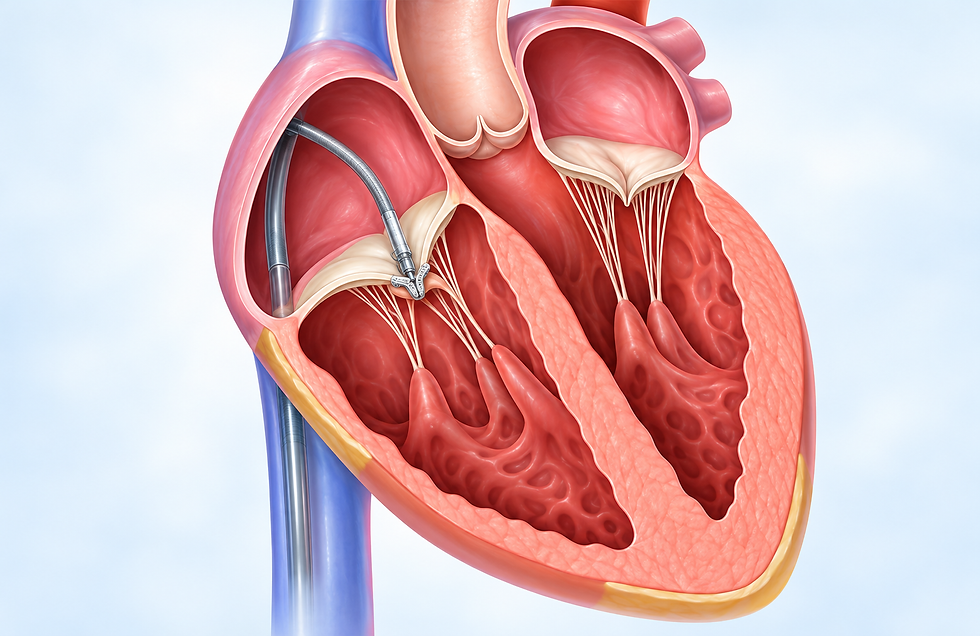
Transcatheter tricuspid valve repair using edge-to-edge repair is a minimally invasive, catheter-based procedure used to treat severe tricuspid regurgitation, a condition in which the tricuspid valve does not close properly, allowing blood to leak backward from the right ventricle into the right atrium. This procedure brings portions of the valve’s leaflets together to reduce leakage. Unlike valve replacement, it preserves and repairs the patient’s native tricuspid valve rather than placing a new prosthetic valve.
The primary goals are to reduce tricuspid regurgitation, relieve symptoms such as fatigue and shortness of breath, and improve functional capacity and quality of life. The degree of improvement varies according to the patient’s underlying heart disease and the effectiveness of the repair.
Post-procedural treatment includes antithrombotic therapy when appropriate and continued management of the patient’s underlying heart failure. Ongoing cardiology follow-up and echocardiographic assessment help evaluate clip stability, remaining regurgitation, valve function, and clinical recovery.