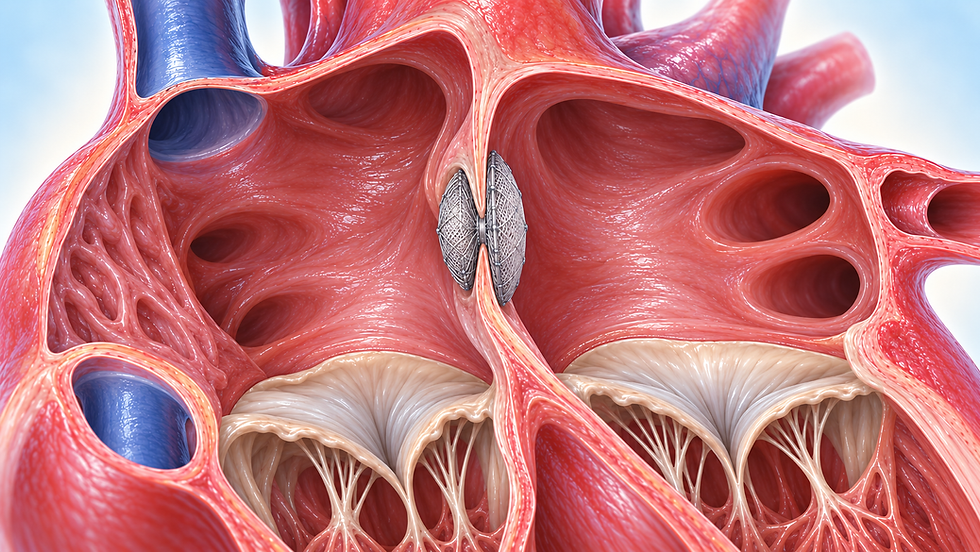
Patent Foramen Ovale (PFO) Closure
Patent Foramen Ovale (PFO) Closure is a minimally invasive, catheter-based procedure designed to close an abnormal opening between the right and left atria of the heart. A PFO is a persistent opening in the atrial septum that normally closes shortly after birth. While many individuals with a PFO experience no symptoms, the opening can occasionally allow blood clots to pass from the right side of the heart to the left, potentially traveling to the brain and causing an ischemic stroke.
PFO closure is primarily performed in carefully selected patients, particularly those with a history of cryptogenic ischemic stroke where the PFO is considered a likely contributing factor. The primary goal of PFO closure is to reduce the risk of recurrent ischemic stroke by preventing blood clots from crossing between the atria. Over time, the body's natural tissue grows over the implanted device, creating a more permanent closure of the opening.
Following the procedure, patients typically require antiplatelet therapy and follow-up echocardiographic imaging to evaluate device positioning, residual shunting, and successful closure. Although generally considered safe and effective in appropriately selected patients, potential complications include vascular injury, device-related thrombus, and new-onset atrial fibrillation.
PFO closure has become an important structural heart intervention, offering eligible patients a minimally invasive approach to reducing recurrent stroke risk, improving long-term cardiovascular care, and preventing complications associated with paradoxical embolism.